Could Your Arlington Backyard Be Worth More Than You Think?
Geva Lester
Arlington,
Geva Lester
Arlington,
What Is an Accessory Dwelling Unit (ADU), and What Should Arlington Homeowners Know?
Have you ever looked at your backyard and wondered whether you could do more with that space? Maybe you've considered creating a private living area for aging parents, providing a place for an adult child to live, or even generating additional rental income.
For some Arlington homeowners, an accessory dwelling unit (ADU) may offer those possibilities.
With changing housing needs, rising living costs, and more families exploring multigenerational living, ADUs are worth understanding. But before you start planning a backyard cottage or converting your basement, it's important to know exactly what Arlington County allows.
An accessory dwelling unit is a separate, self-contained living space located on the same property as a primary residence.
In Arlington County, the official term is accessory dwelling, or AD. It must include its own kitchen and bathroom and be designed for independent living.
ADUs can take several forms:
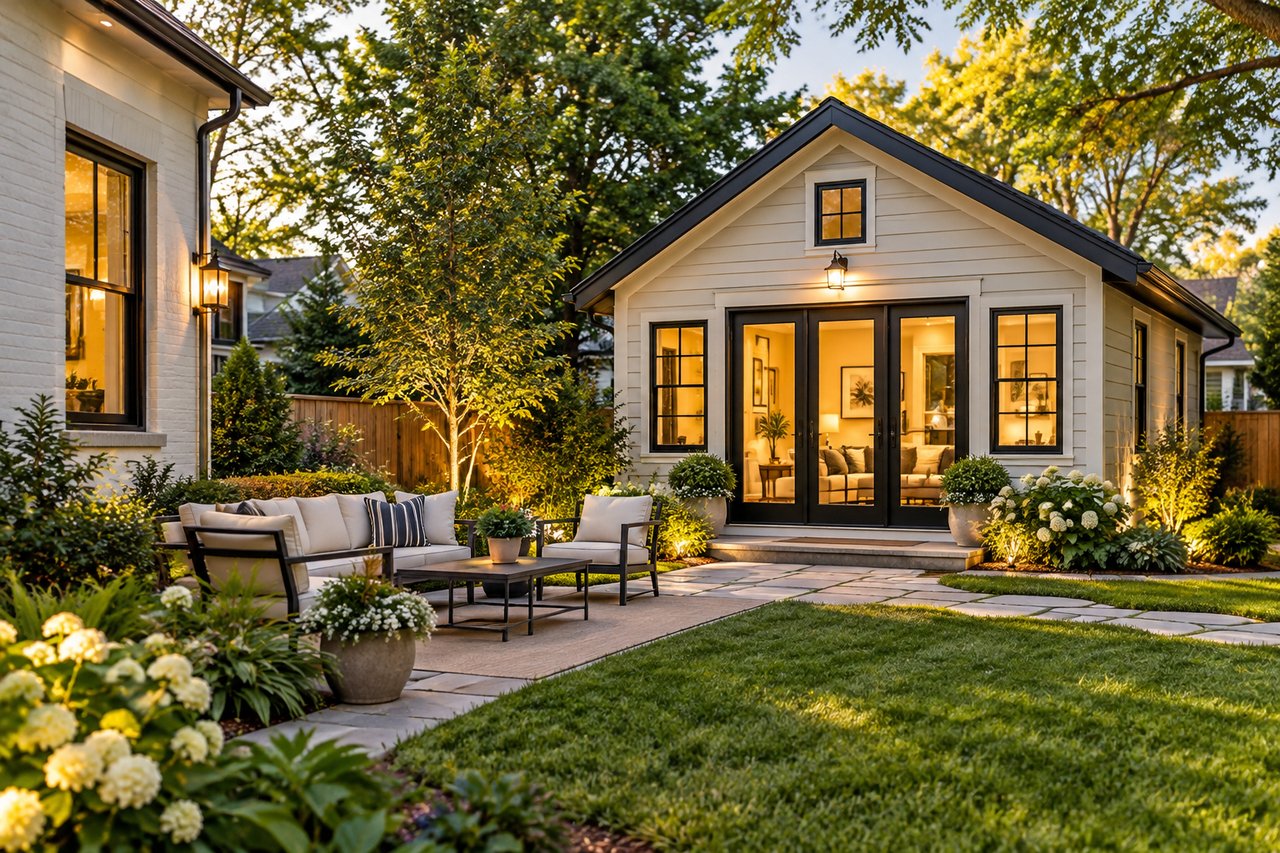
Backyard cottages: A smaller, detached residence behind the main house.
Garage conversions: An existing detached garage converted into a legal living space.
Basement apartments: A separate living unit within the main residence.
Home additions: An attached living space designed to function independently.
Arlington County allows qualifying accessory dwellings within or attached to a detached single-family home, as well as in detached accessory buildings, subject to zoning and building requirements.
One of the biggest attractions of an ADU is flexibility. Our housing needs change throughout life, and having an additional living space can create opportunities that might not otherwise be available.
Aging parents and multigenerational living
An ADU can provide a way for aging parents to remain close to family while maintaining a sense of privacy and independence. Instead of moving into an assisted living community or a larger multigenerational house, families may be able to create a separate residence on an existing property.
A place for adult children
With housing costs in Northern Virginia remaining a concern for many families, an ADU could give an adult child an opportunity to live independently while saving toward a future home.
Potential rental income
A properly permitted ADU may provide an opportunity for long-term rental income. That additional income could help offset some housing expenses or create financial flexibility during retirement.
Planning for the future
Some homeowners may choose to live in the smaller accessory dwelling and have family members occupy the main house. It's another way to think creatively about staying in a neighborhood you love.
The answer is: potentially, yes. But not every Arlington property qualifies.
Arlington County permits accessory dwellings in several residential zoning districts, including R-5, R-6, R-8, R-10, and R-20, among others.
There are important requirements to understand:
The property must have, or be developed with, a qualifying detached single-family home.
The lot cannot already contain another accessory dwelling or a family/caregiver suite.
The property owner must apply for the accessory dwelling permit.
The owner must use either the main house or the accessory dwelling as their primary residence to allow separate households to occupy both units.
The accessory dwelling is limited to no more than three occupants.
Detached accessory dwellings are also subject to specific building placement, height, footprint, setback, and other requirements. For newer detached accessory buildings, Arlington generally limits the building footprint to 560 square feet in R-5 and R-6 districts and 650 square feet in several other eligible residential districts.
These are footprint limits, not necessarily the total permitted living area, and additional zoning and building-code restrictions apply.
An important distinction: A large backyard doesn't automatically mean an ADU can be built. Lot coverage, existing structures, zoning, setbacks, and building requirements all affect what's possible.
This is where things become particularly interesting from a real estate perspective.
An accessory dwelling could make a property more attractive to certain buyers, particularly those looking for multigenerational housing, flexible living arrangements, or potential rental income.
However, the effect on resale value depends on several factors, including the quality of construction, legal permitting, functionality, rental potential, and demand in the immediate neighborhood.
A well-designed, legally permitted ADU may be an appealing feature, but homeowners shouldn't assume that the cost of building one will be fully recovered when selling.
In Arlington neighborhoods where outdoor space and lot size are already valuable, it's especially important to weigh the benefits of additional living space against the loss of usable backyard area.
Not every separate living area is legally an ADU.
Arlington County also recognizes family or caregiver suites, which have their own rules concerning occupancy, design, and use. These may be appropriate for certain family or caregiving arrangements, but they are not interchangeable with a permitted accessory dwelling.
If you're considering converting part of your home for a family member, it's worth understanding which type of approval fits your plans.
Before hiring a contractor or purchasing plans for a backyard cottage, start by reviewing your property's zoning designation and speaking with Arlington County's Zoning Division.
The County recommends a pre-submission meeting to discuss eligibility, building-code requirements, and other considerations.
You can find official information here:
Arlington County Accessory Dwelling Permit and Requirements.
You can also contact Arlington County Zoning at 703-228-3883.
Yes, homeowners can rent out a property approved accessory dwelling in Arlington. However the property owner generally must live in either the main home or the ADU, and the property must meet the Arlington County's requirement.
The cost varies depending on the size, design and type of ADU. Converting an existing space may cost less than building a separate backyard cottage.
Homeowners should get estimates from local contractors and confirm zoning permit requirements before starting.
The cost varies depending on the size, design and type of ADU. Converting an existing space may cost less than building a separate backyard cottage.
Homeowners should get estimates from local contractors and confirm zoning permit requirements before starting.
Arlington's housing needs continue to evolve. Whether it's accommodating aging parents, helping adult children establish independence, or creating more flexible living arrangements, homeowners are increasingly thinking about how their properties can serve them through different stages of life.
An accessory dwelling won't be the right solution for every homeowner. But understanding the possibilities is a smart first step.
At Varity Homes | Geva & Jane Group, we believe that knowing your home's value means understanding more than its square footage or the most recent neighborhood sale. It means recognizing what makes your property unique and how those features may appeal to future buyers.
If you're curious about your Arlington property's potential, whether you're considering an ADU, planning improvements, or simply thinking about your long-term real estate goals, we'd be happy to share our local market perspective. Get to know us.
We are your Arlington and Northern Virginia real estate experts.
Information reflects Arlington County's published guidance reviewed in October 2026. Zoning and permitting requirements may change. Homeowners should confirm property-specific eligibility directly with Arlington County before beginning a project.

Arlington,
A local's guide to flaky crusts, warm ovens, and the neighborhood bakeries worth your Saturday.

Real Estate News & Insights
How our partnership with Side and new technology through HouseCanary's Google Listings Program bring national resources and local expertise together for Arlington and … Read more

Architecture
What Homeowners and Buyers in Arlington, Fairfax County, and Alexandria Need to Know About What Legally Counts as a Bedroom.
Arlington,
What Arlington Homeowners Need to Know About Accessory Dwelling Units (ADUs), Multigenerational Living, and Property Value.

Arlington Real Estate
You’ve probably driven past them. Here’s what they do and why they’re making news across Northern Virginia.

Real Estate
Why today’s rate is only one piece of the home buying equation, and what Arlington buyers should be looking at instead.
Arlington,
Dominion Energy’s Home Energy Evaluation program replaces your light bulbs, at no cost. Here’s what it actually involves.

Arlington,
A neighbor's guide to where the market is headed this fall, and what it means if you're thinking about buying or selling.

Arlington,
From lazy rivers to tree canopy covered hikes, here's how to make the most of the season without letting the heat win.
You’ve got questions and we can’t wait to answer them.